White spots on fish? How to spot and treat ich
Our own tank got hit recently: several fish came out in a fine layer of white spots on their bodies and fins, as if someone had sprinkled them with salt. This is one of the most common fish diseases there is, white spot disease, also known as ich (or “ick”). It spreads fast, but if you identify it correctly and treat it according to its life cycle, it can be brought under control in most cases.
What ich looks like
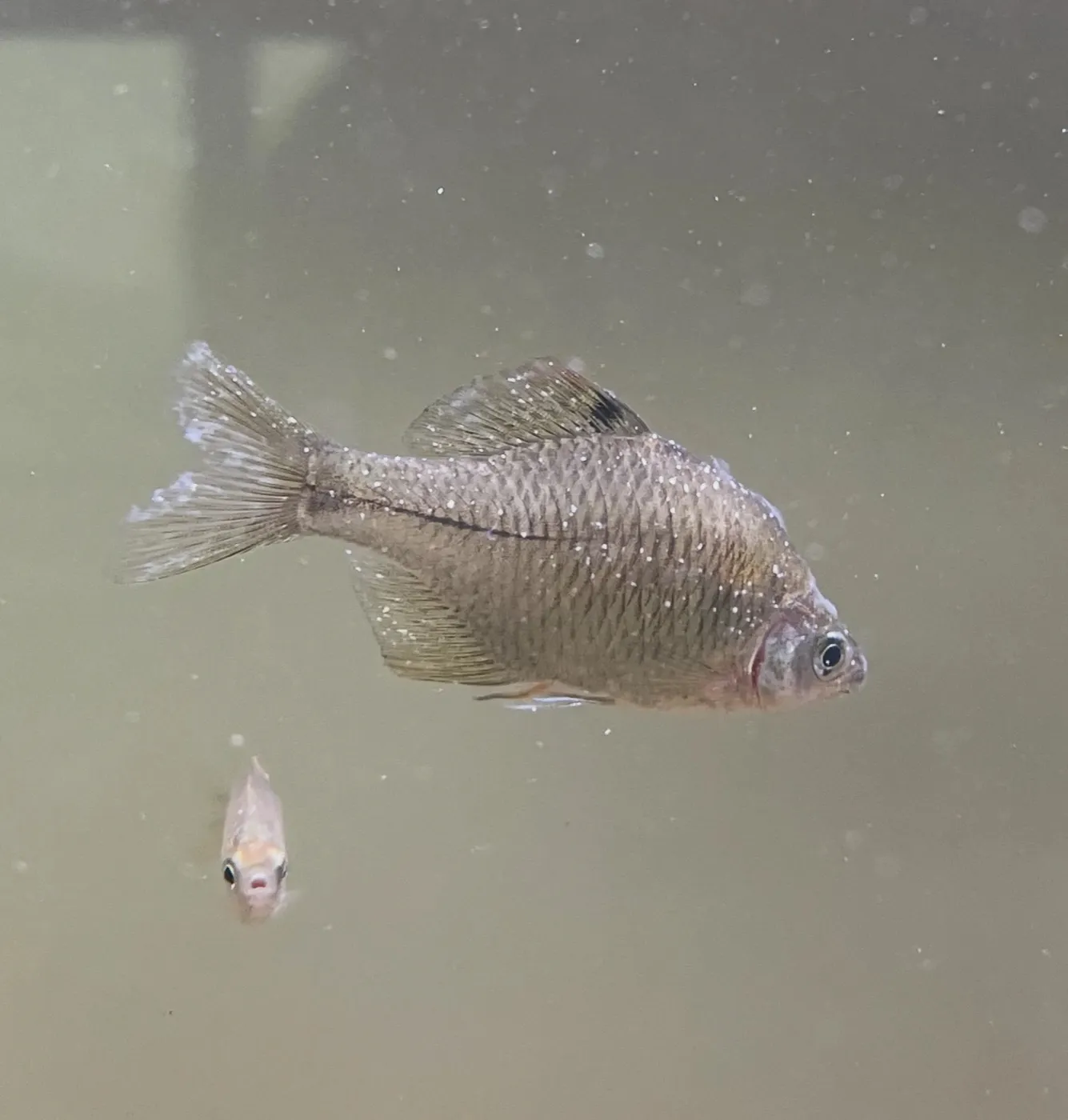
Ich is fairly easy to recognize:
- White spots: pinhead- to sesame-seed-sized spots (about 0.5–1 mm, or 1/50–1/25 in) on the body and fins, like grains of salt or sugar, with clear edges. There are more of them every day.
- Flashing: fish rub their bodies against the glass, rocks or substrate from time to time, as if scratching an itch.
- Lethargy: fins are clamped instead of spread, the fish swim less, hide in corners or hang around the filter outlet, and eat less.
- Faster breathing: when the parasites get into the gills, fish breathe rapidly, and in severe cases come up to the surface and gasp.
Things to tell it apart from: during breeding season, male goldfish grow “breeding tubercles” on their gill covers and pectoral fins. These are normal, appear only in those fixed places and don’t spread. If the white looks like tufts of cotton wool, it’s more likely a fungal infection, which is treated differently.
Understand its life cycle first: why you keep treating after the spots are gone
Ich is caused by a single-celled parasite. Its life has roughly three stages:
- On the fish: the parasites burrow into the skin and gills, feed and grow. The white spots you see are them. At this stage they’re covered by the fish’s tissue, so medication and salt barely reach them.
- Off the fish, multiplying in the tank: mature parasites drop off, settle on the substrate or glass and form cysts, each of which divides into hundreds or thousands of young parasites.
- Young parasites looking for a new host: they break out and swim through the water. They have to find a fish within a day or two or they die. This is the only stage where they’re easy to kill.
So the strategy is to make the parasites complete a cycle as quickly as possible, then kill the young ones while they’re swimming in the water. This also explains two common things: when treatment starts, the spots may increase rather than decrease (that’s normal: the parasites on the fish haven’t dropped off yet); and spots disappearing doesn’t mean the fish are cured, because cysts in the tank may still be hatching, so you need to keep going for a while.
Common treatments
These are approaches fishkeepers commonly use. Tolerance varies a lot between species, so look up the fish you keep before you start, always follow the dose on the label, and don’t mix different medications.
1. Raise the temperature slowly
How fast ich develops depends heavily on water temperature: the colder the water, the longer each cycle (it can take two or three weeks in cool water). Raising the temperature speeds up the life cycle, so treatment works much faster. Many tropical fish and goldfish can have their water raised slowly to around 28 °C (82 °F), by 1–2 °C (2–4 °F) a day; don’t push it up all at once.
When raising the temperature, keep in mind that warmer water holds less oxygen, and sick fish already have affected gills, so always increase aeration (turn up the air pump and keep the surface moving). Don’t raise the temperature blindly for coldwater fish or species sensitive to heat.
2. Add salt
Adding non-iodized coarse salt or aquarium salt to the water is a supporting method many people use, commonly at about 0.3%, which is roughly 3 g per liter (about 11 g per US gallon). Dissolve the salt in water first and add it in two or three portions; don’t sprinkle it straight into the tank.
Note: scaleless fish, some corydoras and loaches, shrimp and live plants are sensitive to salt. Top the salt back up in proportion to the water you replace at each water change, and bring it down gradually with water changes once treatment is over.
3. Methylene blue
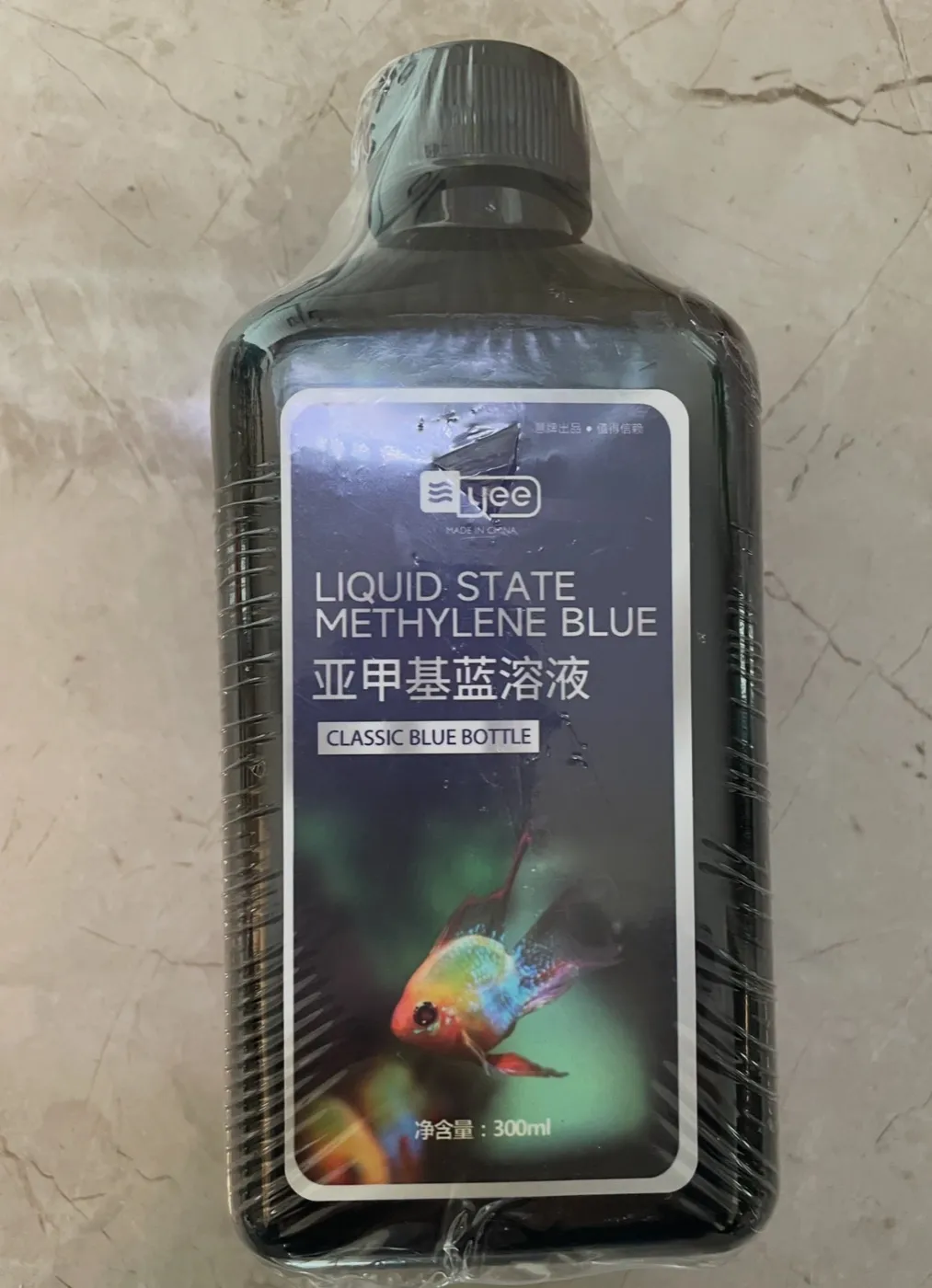
Methylene blue is a common aquarium medication that works against both the free-swimming parasites and fungus. A few things to know before you use it:
- It stains the water and things in the tank blue, and silicone and plastic decorations may not wash clean.
- It’s hard on live plants, and it also harms the nitrifying bacteria in your filter, which can push ammonia and nitrite up.
- Activated carbon absorbs the medication, so take any carbon out of the filter while you dose.
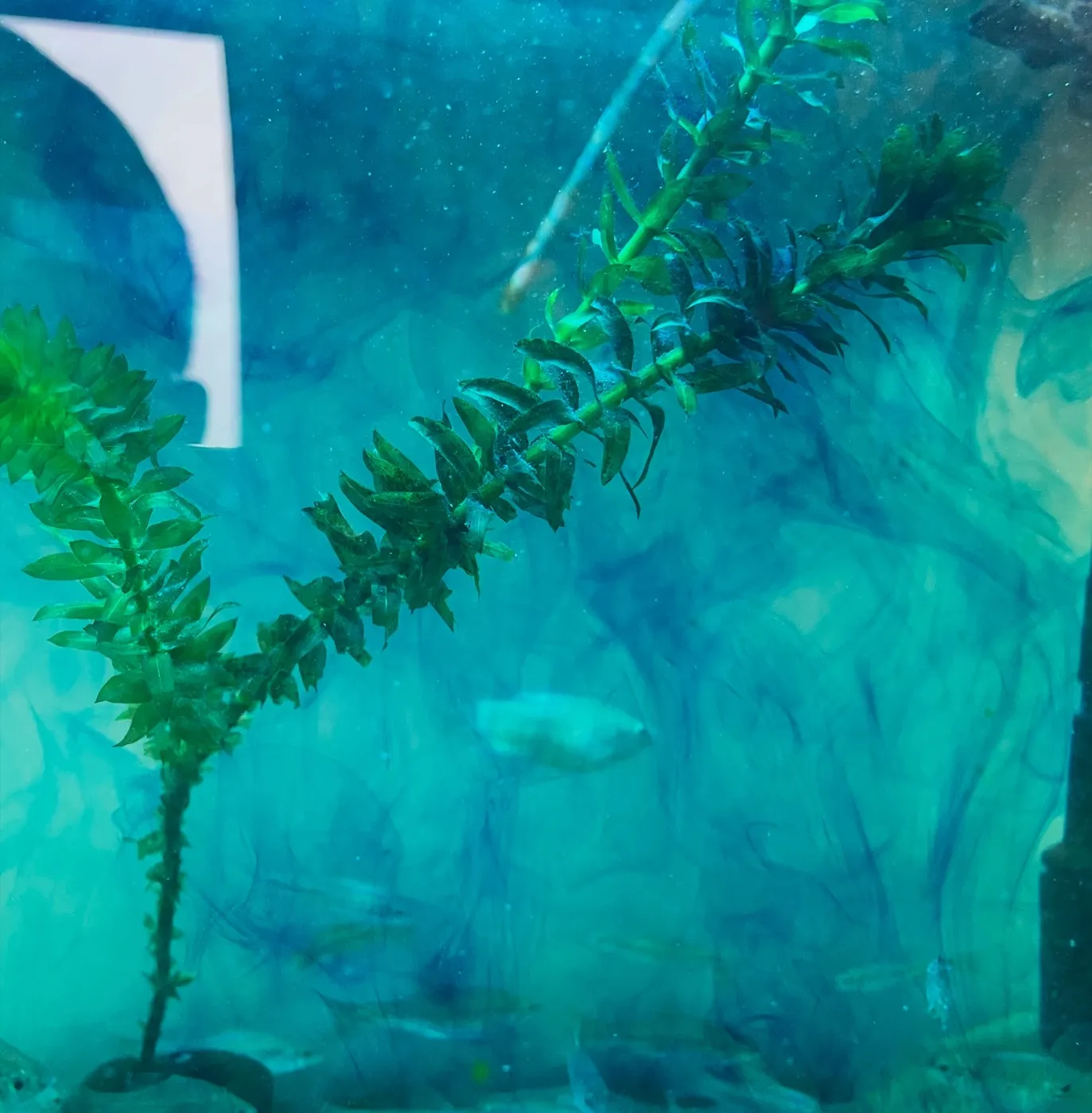
That’s what our tank looked like after we dosed the main tank directly. If you can, it’s better to move the sick fish into a separate hospital tank (one without plants or mature filter media) for medication, and clear the remaining cysts from the main tank with higher temperature and water changes. If you treat the main tank directly as we did, watch water quality closely, and once treatment is finished, do several water changes to bring the color and medication down.
4. Water changes and gravel vacuuming
Cysts settle on the substrate and glass. During treatment, change part of the water every day or two (for example 20–30%) and use a gravel vacuum to pull the debris out of the substrate as you go. This directly reduces the number of young parasites in the next generation. Match the new water’s temperature to the tank to avoid temperature swings.
How long to treat
The usual rule of thumb: keep treating for at least 5–7 days after the last white spot is gone (longer if the water is cool), so that any remaining cysts in the tank hatch and the young parasites are dealt with. Then stop the medication gradually and return to normal with water changes. Stopping partway through makes it very likely to come back.
How to prevent it
- Quarantine new fish first: keep newly bought fish on their own for one to two weeks, and only add them to the main tank if they stay healthy. This is the most effective prevention there is.
- Keep the temperature stable: seasonal changes, large temperature differences during water changes and failing heaters all lower fish’s resistance and make outbreaks more likely.
- Don’t disrupt the tank more than you need to: stable water quality, no overfeeding and no overcrowding. The fish’s own resistance is the best defense.
How Keepova can help
With AI care turned on, Keepova runs a daily health check: during the hours when the lights are on, the tank phone takes a set of sharper photos, and AI looks at the fish’s bodies and fins for possible white spots, cotton-like fungus, red patches or fin rot. If it sees something the first time, it automatically takes another set about 10 minutes later to re-check, and only alerts you if both checks see it.
To be clear, it can only judge when fish swim in front of the camera and are large and sharp enough in the picture; if it can’t see clearly, it doesn’t draw a conclusion. A few early spots, or the side of a fish facing away from the camera, can easily be missed. So the alert means “possible”, not a diagnosis, and it can’t replace taking a close look yourself. When you get one, check your fish in person against the signs described above.
During treatment, there are a few more things it can keep an eye on for you:
- Raising the temperature and dosing can lower oxygen: if your fish crowd at the surface gasping, AI care will alert you so you can increase aeration in time.
- The heater and air pump both run on electricity: if the power goes out during treatment, Keepova lets you know right away, before the temperature drops and oxygen runs low.
- Check in even when you’re out: open the live view at work to see how lively the fish are and whether the spots are increasing.
This article is for general information only and is not a veterinary diagnosis or professional advice. If your fish show serious symptoms, consult an experienced aquarium store or an aquatic veterinarian.